Florida’s warm, humid climate creates the perfect environment for mold growth—especially in multifamily properties such as apartment buildings, condos, and mixed-use developments. When mold appears, it doesn’t just affect one unit: it can spread quickly, impact multiple tenants, and turn into a serious legal and financial issue for property owners and investors.
This guide explains practical mold prevention tips for Florida multifamily properties, helping owners, property managers, and investors reduce risk, protect asset value, and avoid costly remediation.
Why Multifamily Properties in Florida Are More Vulnerable to Mold
Multifamily buildings face unique challenges that single-family homes don’t.
Key risk factors include:
- Shared walls and plumbing systems
- Higher humidity from multiple occupants
- HVAC systems serving several units
- Delayed reporting of leaks or moisture
- Older construction materials in legacy buildings
In Florida, even a small, unnoticed moisture issue can become a mold problem within days.
According to the EPA, mold can begin growing within 24–48 hours when moisture is present.
Common Mold Causes in Florida Multifamily Properties
Understanding the source is the first step toward prevention.
Most frequent causes include:
- Roof leaks affecting multiple units
- Plumbing leaks behind walls
- Poor bathroom and kitchen ventilation
- HVAC condensation issues
- Flooding or storm-related water intrusion
- Improper drainage around foundations
Many of these issues are structural, not tenant-related—making proactive building maintenance essential.
Mold Prevention Tips for Florida Multifamily Properties
1. Control Moisture at the Building Level
Moisture is mold’s fuel. Eliminating it is non-negotiable.
Best practices:
- Maintain indoor humidity below 60%
- Install dehumidification systems in common areas
- Seal exterior walls, windows, and roof penetrations
- Ensure proper slope and drainage around the building
The CDC emphasizes moisture control as the most effective mold prevention strategy.
2. Schedule Regular Roof and Exterior Inspections
Roof failures are a top cause of widespread mold in multifamily properties.
A professional inspection helps detect:
- Failing membranes
- Loose flashing
- Ponding water
- Storm damage
Early detection can prevent mold from spreading across multiple units.
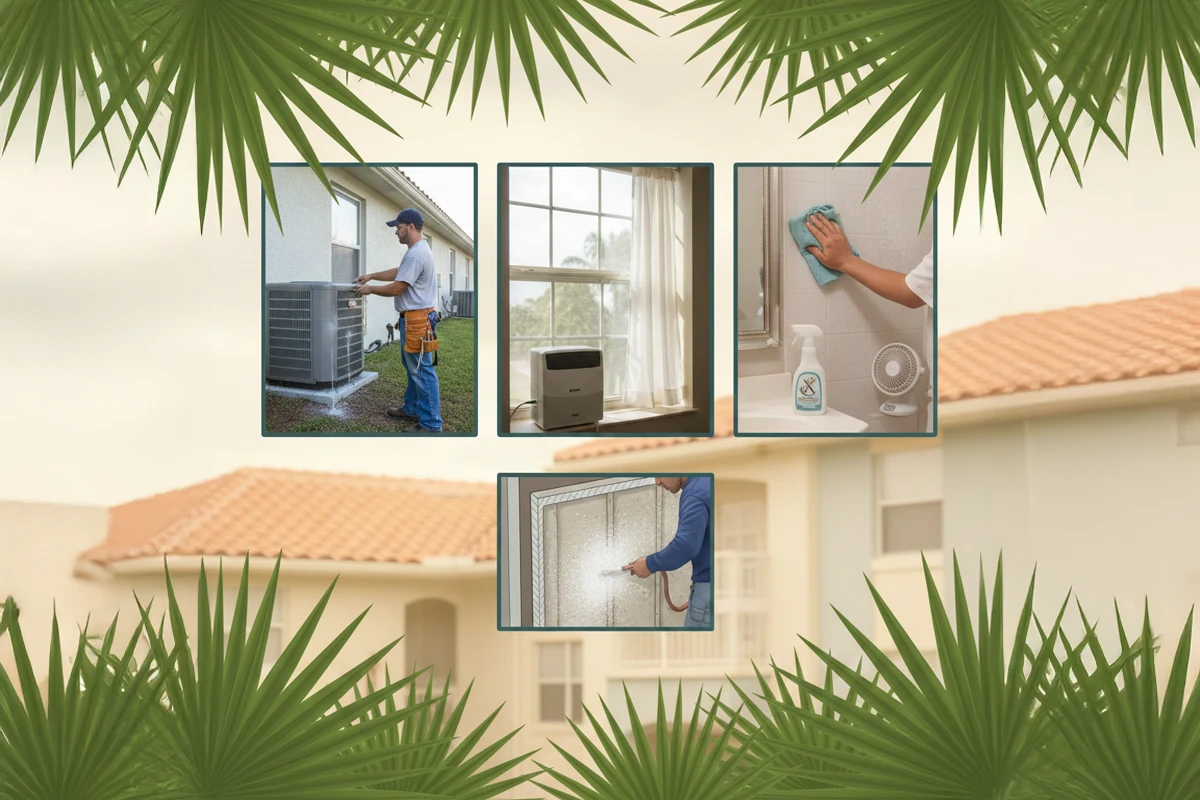
3. Upgrade and Maintain HVAC Systems
HVAC systems can either prevent or spread mold.
Preventive actions:
- Clean condensate drain lines regularly
- Replace air filters on schedule
- Ensure proper airflow in all units
- Inspect ductwork for condensation
Poor HVAC performance often leads to hidden mold inside walls and ceilings.
4. Implement a Rapid Leak Response Protocol
Time matters.
Property managers should:
- Require tenants to report leaks immediately
- Inspect reported issues within 24 hours
- Dry affected areas within 48 hours
- Document repairs and moisture readings
This protocol alone can drastically reduce mold-related claims.
5. Educate Tenants Without Shifting Responsibility
Tenants play a role—but responsibility stays with ownership.
Simple tenant guidance can help:
- Use exhaust fans when showering
- Avoid blocking air vents
- Report condensation or odors promptly
This reduces risk without creating liability confusion.
Why Mold Prevention Tips Matter for Multifamily Properties in Florida
For owners and managers of multifamily buildings, following proven Mold Prevention Tips is not optional—it’s a core part of risk management. In Florida’s humid environment, even well-maintained properties can develop mold issues if prevention strategies are not applied consistently.
Implementing clear Mold Prevention Tips at the building level helps reduce maintenance costs, protect tenant health, and preserve long-term property value. These strategies are especially important in multifamily properties, where moisture problems can affect multiple units at once.
By adopting professional Mold Prevention Tips early, property owners can avoid repeated remediation cycles and create safer, more durable living environments.
When Mold Prevention Is Not Enough
Even with strong prevention strategies, Florida’s climate can still create problems—especially in older or high-density buildings.
At that point, professional evaluation becomes critical.
The Florida Department of Health provides clear guidance on when mold requires professional attention:
👉 Florida DOH – Mold Information

Mold Prevention Tips for Florida Multifamily Properties
How Mold Prevention Protects Property Value and ROI
For multifamily owners and investors, mold prevention is not just maintenance—it’s asset protection.
Benefits include:
- Lower remediation costs
- Reduced tenant turnover
- Fewer legal claims
- Higher long-term property value
- Improved marketability
Prevention is always cheaper than remediation.
Preventive Improvements That Make a Real Difference
Many mold issues originate from outdated materials or construction details.
This is where strategic remodeling and building improvements matter.
Projects that reduce mold risk:
- Bathroom and kitchen ventilation upgrades
- Moisture-resistant drywall and finishes
- Improved waterproofing systems
- Structural repairs after water damage
These improvements are commonly handled through Cipriano Improvements, which focuses on remodeling solutions designed for Florida’s climate and multifamily needs.
For properties requiring deeper structural work, Cipriano Construction provides building-level solutions that address moisture at its source—not just the symptoms.
When Should Multifamily Owners Request a Mold Inspection?
A professional inspection is recommended when:
- Multiple units report odors or symptoms
- Past water damage was not properly dried
- Units remain vacant for long periods
- HVAC systems show signs of condensation
- The building is being prepared for sale or refinancing
Early inspections often prevent far larger remediation projects.
Final Thoughts: Mold Prevention Is a Strategy, Not a Reaction
For Florida multifamily properties, mold prevention must be systematic, proactive, and ongoing. Waiting for visible mold almost always means the problem is already advanced.
By combining:
- Moisture control
- Building maintenance
- Preventive upgrades
- Professional inspections
Owners and investors can significantly reduce risk while protecting long-term returns.
Ready to Protect Your Multifamily Property From Mold?
Applying the right Mold Prevention Tips is the most effective way to protect multifamily properties in Florida from costly mold problems. However, every building is different, and long-term prevention often requires professional evaluation, targeted improvements, and ongoing maintenance strategies.
If you want expert guidance tailored to your property, the Cipriano team can help assess moisture risks, recommend preventive upgrades, and implement solutions designed for Florida’s climate. Contact Cipriano today to discuss how to protect your investment, reduce risk, and maintain healthy living environments for your tenants.