Living in Florida teaches you one thing very fast: your roof works harder than in almost any other state. Sun, humidity, heavy rain, and hurricanes put constant pressure on it.
I’ve seen many homeowners wait until water comes through the ceiling. That’s usually too late — and much more expensive.
So here’s how I personally learned how to know if your roof needs repair in Florida, before small issues turn into major problems.
Why Roof Damage Is So Common in Florida
Florida roofs age faster. There’s no mystery here.
Between:
- Intense UV exposure
- Heavy rain and moisture
- Tropical storms and hurricanes
- Salt air near the coast
Even a “good” roof can start failing earlier than expected.
That’s why regular inspections and early detection matter so much.
7 Clear Signs Your Roof Needs Repair in Florida
1. Missing, cracked, or curling shingles
This is one of the easiest signs to spot.
If you notice:
- Shingles lifting at the edges
- Cracks or brittle surfaces
- Bald spots where granules are gone
Your roof is telling you it’s under stress.
In Florida, wind damage often loosens shingles long before they fall off.
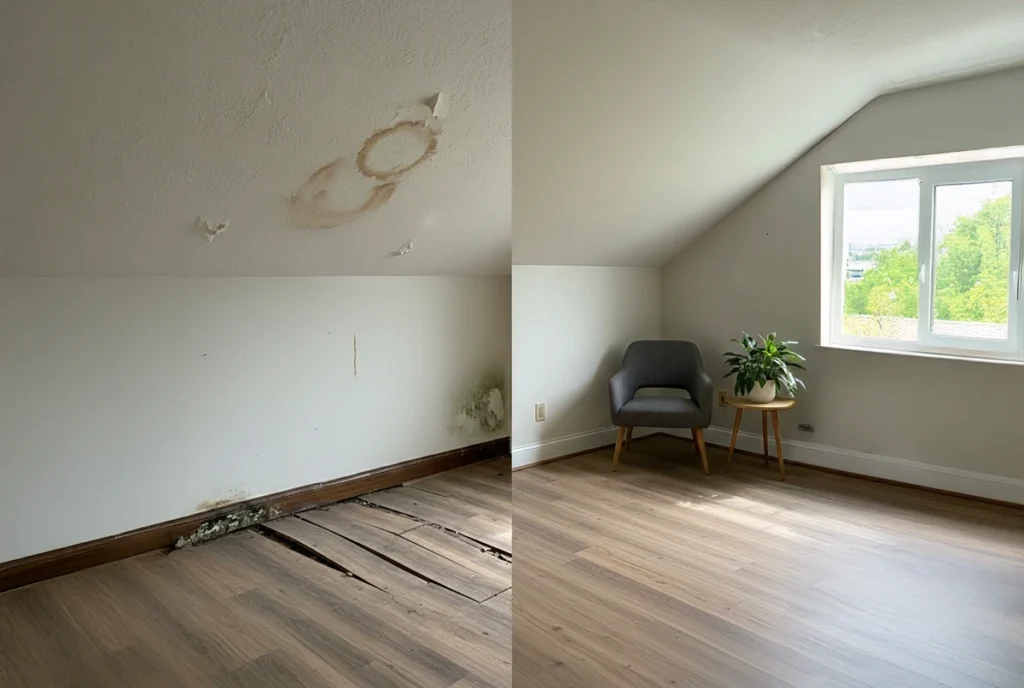
2. Water stains on ceilings or walls
Brown spots, yellow stains, or bubbling paint are red flags.
Important detail:
The leak doesn’t always appear directly below the damaged area.
Water travels. By the time you see stains, the problem may already be spreading.
3. Mold or mildew near the roofline
Mold is extremely common in Florida homes.
If you see mold:
- In the attic
- Near ceiling corners
- Around vents
There’s a good chance your roof has a moisture issue. Even small roof leaks can create perfect conditions for mold growth.
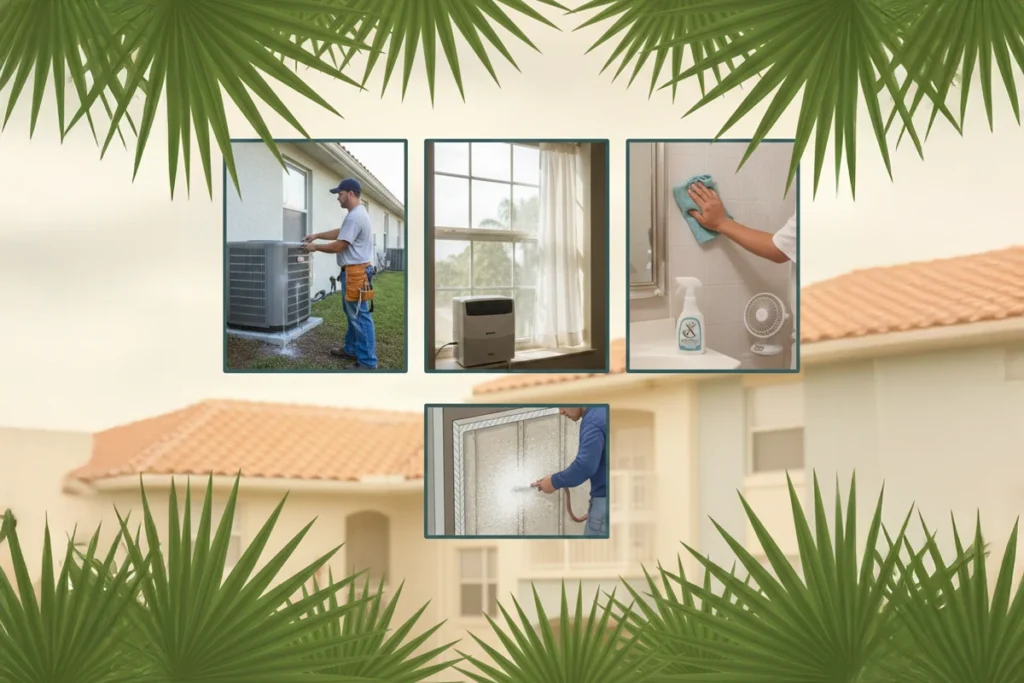
👉 This often leads to broader remediation and renovation work.
4. Sagging or uneven roof lines
A sagging roof is never cosmetic.
It usually means:
- Trapped moisture
- Rotting decking
- Structural stress
This requires immediate professional attention. Waiting only makes repairs more complex and costly.
5. Granules in gutters or downspouts
If you clean your gutters and notice sand-like material, that’s roofing granules.
Granule loss means your shingles are losing their protective layer. In Florida’s sun, that accelerates roof failure fast.
6. Rising energy bills
This one surprises many homeowners.
A damaged roof allows heat and moisture inside. Your AC works harder. Bills go up.
If energy costs increase without explanation, your roof could be part of the problem.
7. Your roof is older than you think
Typical roof lifespan in Florida:
- Asphalt shingles: 15–20 years
- Tile roofs: 20–30 years
- Flat roofs: 10–15 years
Storms and humidity often shorten these ranges.
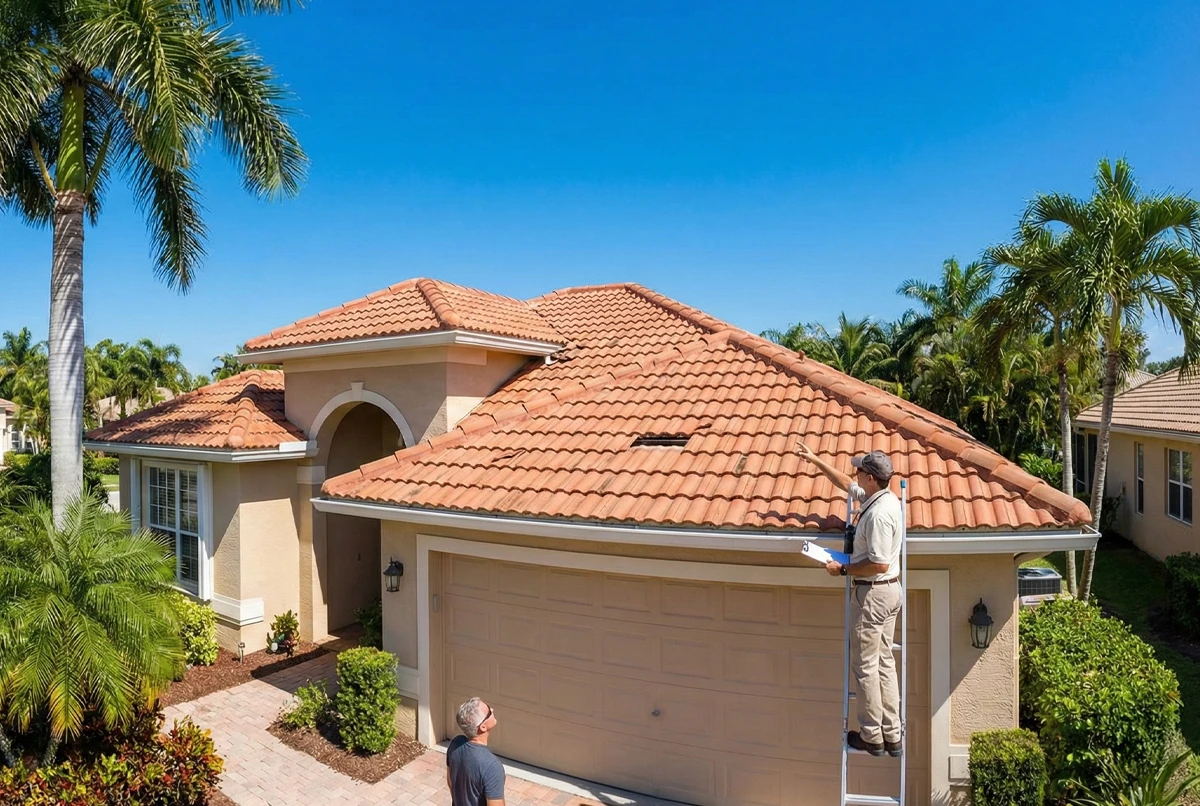
If your roof is approaching these numbers, inspections should be routine — not optional.
How to Know If Your Roof Needs Repair in Florida
Roof Repair vs Roof Replacement: How to Know the Difference
Not every problem requires a full replacement.
Roof repair makes sense when:
- Damage is localized
- Shingles are mostly intact
- Structure is solid
- No long-term moisture intrusion
Replacement is usually better when:
- Repairs keep repeating
- Structural damage exists
- The roof is near end-of-life
- Insurance inspections fail
A professional evaluation makes this decision much clearer.
When Should You Get a Roof Inspection in Florida?
I recommend:
- After major storms
- Before hurricane season
- Before selling a property
- After buying a home
- Every 1–2 years minimum
Roof inspections often uncover hidden issues early — when they’re still affordable.
How Roof Issues Affect Property Value in Florida
From a real estate perspective, roof condition is critical.
Buyers, inspectors, and insurers focus heavily on:
- Remaining roof life
- Visible damage
- Past repairs
Roof problems can:
- Delay closings
- Reduce offers
- Trigger mandatory repairs
- Increase insurance premiums
That’s why roof repairs are often tied directly to renovation and improvement projects.
How Cipriano Supports Homeowners and Real Estate Professionals
Roof issues rarely exist alone. They often connect to broader property needs.
At Cipriano Properties, we work with:
- Homeowners
- Investors
- Real estate agents
Providing solutions that go beyond inspections, including:
- Property repairs before listing
- Interior renovations after roof leaks
- Bathroom and kitchen remodeling
- Full home improvements
- New construction and upgrades
This is especially valuable for agents preparing homes for sale or managing inspection reports.
For more information visit our main page and learn about our other construction and remodeling services.
Final Thoughts
Knowing how to know if your roof needs repair in Florida can save you stress, money, and major structural problems.
The key is simple:
- Watch for early signs
- Don’t wait for visible leaks
- Act before damage spreads
In Florida, proactive roof care isn’t optional — it’s smart ownership.